Let’s just state the obvious right up front: living with a dog or a cat means making peace with a certain level of chaos. We gladly trade spotless rugs for couch snuggles, and we accept the harsh reality that our favorite black sweaters will forever feature a fine layer of pet hair.
But there is a massive difference between a home that looks “comfortably lived-in” and a house that feels completely overrun by your furry roommates.
For decades, the only advice pet owners got was to “clean more often.” But if you share your home with a shedding Husky, a mud-loving Golden Retriever, or a cat that treats its litter box like a sandbox, you already know the truth. Manual sweeping simply cannot keep up with the biology of an animal. Fur falls every single second of the day. Mud gets tracked in without warning. Water bowls are splashed across the kitchen floor hourly.
If you want to maintain a sanitary, guest-ready home without spending your entire weekend holding a broom, you have to stop thinking about cleaning as a chore. Instead, you need to build a defense system. And a proper defense system requires two very different players working together.
Daily Pet Hair Control: Why Robot Vacuums Work Best
If you have pets, your biggest daily battle isn’t actually the big, dramatic messes—it is the quiet, relentless shedding. Shedding isn’t an event; it is a lifestyle. You can spend an hour doing a deep clean on a Saturday morning, and by Monday afternoon, tumbleweeds of hair are already having a reunion party under your TV stand.
The main problem with traditional sweeping or vacuuming is that it is entirely reactive. You wait until the floor looks visibly furry, and then you drag the machine out of the closet. By that time, the micro-dander and dust have already settled deep into your floorboards and upholstery.
This is where shifting to proactive automation changes everything. The true value of a vacuum and mop combo in a pet-friendly house isn’t about raw power—it is about stubborn persistence.
Why automation beats manual sweeping:
- Breaking the Cycle: By scheduling your automated device to run every single day while you are at work, you physically interrupt the shedding cycle before hair can accumulate.
- The Dander Trap: A good combo device doesn’t just suck up visible dog hair; its damp pad wipes away the invisible “nose art,” paw smudges, and fine dander on your hard floors before they dry and set in.
- Mental Relief: You never have to walk through the front door after a long day at the office and instantly feel stressed by a dirty floor. The baseline of your home is reset every single day.
Handling Pet Messes: Why You Need a Wet Dry Vac
While automation easily handles dry, daily maintenance, every pet owner knows that the real panic sets in when water or bodily fluids are involved.
Let’s picture a rainy Tuesday afternoon. Your dog comes in from the backyard, shakes off, and immediately tracks wet mud across the kitchen tiles. Or maybe your new puppy has a digestive accident on the hallway floor.
Standard vacuums have a fatal flaw: moisture. If you run a regular stick vacuum over a spilled water bowl or wet mud, you risk destroying the motor (and creating a terrible smell that will never leave the machine). On the flip side, grabbing a traditional string mop for these messes is just gross. You usually end up smearing the muddy water around, diluting the mess rather than actually removing it, and then you are left with a filthy mop head that you have to wash by hand.
This exact nightmare is why a dedicated wet dry vacuum cleaner is non-negotiable for pet parents.
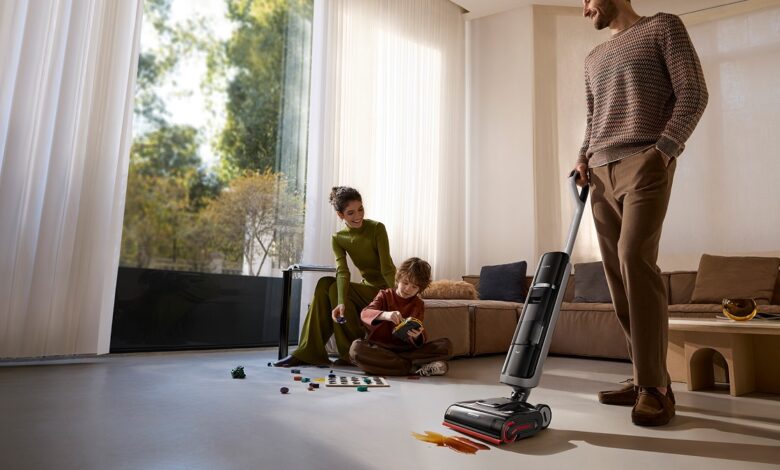
Unlike a passive robot or a standard dry vacuum, this machine is designed to inhale liquids, solids, and sticky grime all at the exact same time. Imagine a bowl of kibble gets knocked over into a puddle of water. You don’t need to waste half a roll of paper towels picking up the soggy food first. You just run the wet/dry machine over the pile. It sucks up the bulky kibble and the liquid while simultaneously scrubbing the floor with fresh water. Because the dirty, muddy water is instantly sucked away into a separate, sealed tank, you are never cross-contaminating your floors.
Pet Mess Cleaning: Traditional Methods vs Modern Solution
Still not convinced you need two separate devices? Let’s look at how this strategy completely changes the reality of cleaning up after our animals.
| Type of Pet Mess | The Old, Frustrating Way | The Two-Vacuum Strategy |
| Daily Shedding & Pet Dander | Waiting until the weekend to spend an hour vacuuming the whole house. | Zero effort. The automated combo runs daily at 10 AM, keeping floors continuously fur-free. |
| Muddy Paw Prints (Rainy Days) | Wiping with paper towels, then mopping, then waiting for the floor to dry. | 30 seconds. One pass with the manual wet/dry vac scrubs and dries the mud instantly. |
| Spilled Kibble & Water | Picking up wet kibble by hand, sweeping the dry bits, mopping the water. | One step. The wet/dry vac inhales the food and liquid simultaneously without clogging. |
| Slobbery Toys on Hardwood | Ignoring the sticky residue until your socks stick to the floor. | The automated mop lightly wipes away daily drool spots before they become sticky traps. |
A Smarter Cleaning Strategy for Pet Owners
To truly win the war on pet hygiene, you need to stop trying to use one tool for everything and start deploying your devices in a “Zone Defense” strategy. Here is exactly how to run your floor-care routine without losing your mind:
- The Open Floor (The Automated Domain)
The large, open areas of your home—like the living room, long hallways, and bedrooms—are where floating hair accumulates the fastest. Let your automated combo device own this territory.
Pro-Tip: Schedule it to run mid-morning, right after the chaotic morning routine of feeding and walking the dog is finished. - The “High-Risk” Corners (The Wet/Dry Domain)
The back door, the mudroom, and the kitchen corner where the food and water bowls live are high-risk zones. These areas require high-torque scrubbing and heavy suction.
Pro-Tip: Keep your manual wet/dry machine charged and docked near this area. When your dog splashes water everywhere after a walk, you can grab it, erase the puddle in ten seconds, and put it right back.
A Cleaner Home Without the Stress
Ultimately, adopting this multi-device approach is about way more than just aesthetics; it is about household health. Our pets walk on city sidewalks, run through dirt, and step in questionable things at the park, and then they track that invisible microbiome straight into our kitchens and living rooms.
Your automated device reduces the overall bacterial load by constantly sweeping away the organic matter (like dander and dust) that allergens cling to. Meanwhile, your high-powered wet/dry machine provides the deep sanitation needed to physically scrub away germ-laden spills and outdoor mud.
By investing in both sides of the cleaning equation, you are buying peace of mind. You no longer have to panic when friends drop by unannounced, worry about your toddler crawling on a dirty floor, or spend your evenings scrubbing spots. You get to step back, relax, and actually get back to doing what matters most: playing with your pet.